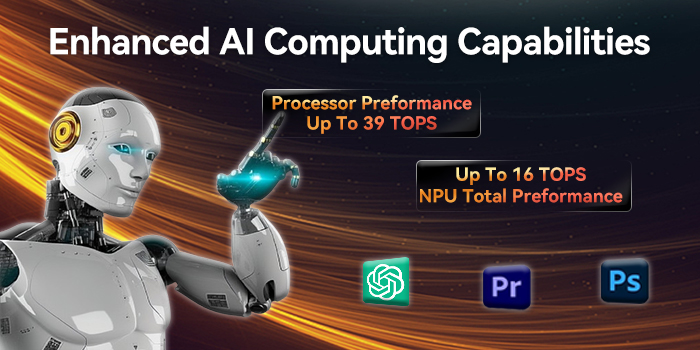
The rapid evolution of neural processing units (NPUs) is ushering in a transformative era for mini computer, enabling these compact devices to deliver unprecedented artificial intelligence (AI) performance. As semiconductor manufacturers prioritize NPU enhancements, the implications for AI-driven applications—from edge computing to smart embedded systems—are profound.
The NPU Advantage: Powering Smarter, Faster Mini PC
Modern NPUs, specialized processors optimized for AI workloads, are engineered to accelerate tasks such as machine learning inference, real-time data analytics, and neural network computations. Recent advancements in NPU architecture—including improved parallelism, energy efficiency, and on-device processing capabilities—have significantly boosted the AI computing power of mini desktop computer.
For compact systems like industrial IoT controllers, portable medical devices, and smart home hubs, upgraded NPUs translate to:
- Lower Latency: Real-time decision-making without relying on cloud connectivity.
- Energy Efficiency: Sustained AI performance with minimal power consumption.
- Scalability: Support for complex models like computer vision and natural language processing (NLP) directly on-device.
Industry Applications: From Factories to Living Rooms
The integration of advanced NPUs is reshaping industries:
- Edge AI: Factories leverage minicomputers with enhanced NPUs for predictive maintenance and quality control, reducing downtime.
- Healthcare: Portable diagnostic tools now process medical imaging locally, ensuring data privacy and rapid results.
- Consumer Tech: Smart cameras and voice assistants achieve smoother, context-aware interactions.
Dr. Emily Chen, CTO of EdgeAI Technologies, notes, "The leap in NPU performance erases traditional limitations of minicomputers. We’re witnessing a shift where even palm-sized devices can run sophisticated AI models—this changes how we design embedded systems forever."
Challenges and Future Outlook
While NPU advancements promise vast potential, challenges remain. Optimizing software frameworks for heterogeneous computing (combining NPUs, CPUs, and GPUs) and ensuring security in decentralized AI are critical focus areas. Analysts predict the global edge AI market will grow at a 25% CAGR through 2030, driven largely by NPU innovation.
Conclusion
The enhancement of processor NPUs marks a pivotal milestone for minicomputers, transforming them into powerful AI-ready platforms. As industries adopt these upgrades, the boundary between compact devices and high-performance computing continues to blur—ushering in an era where intelligence is truly decentralized.